
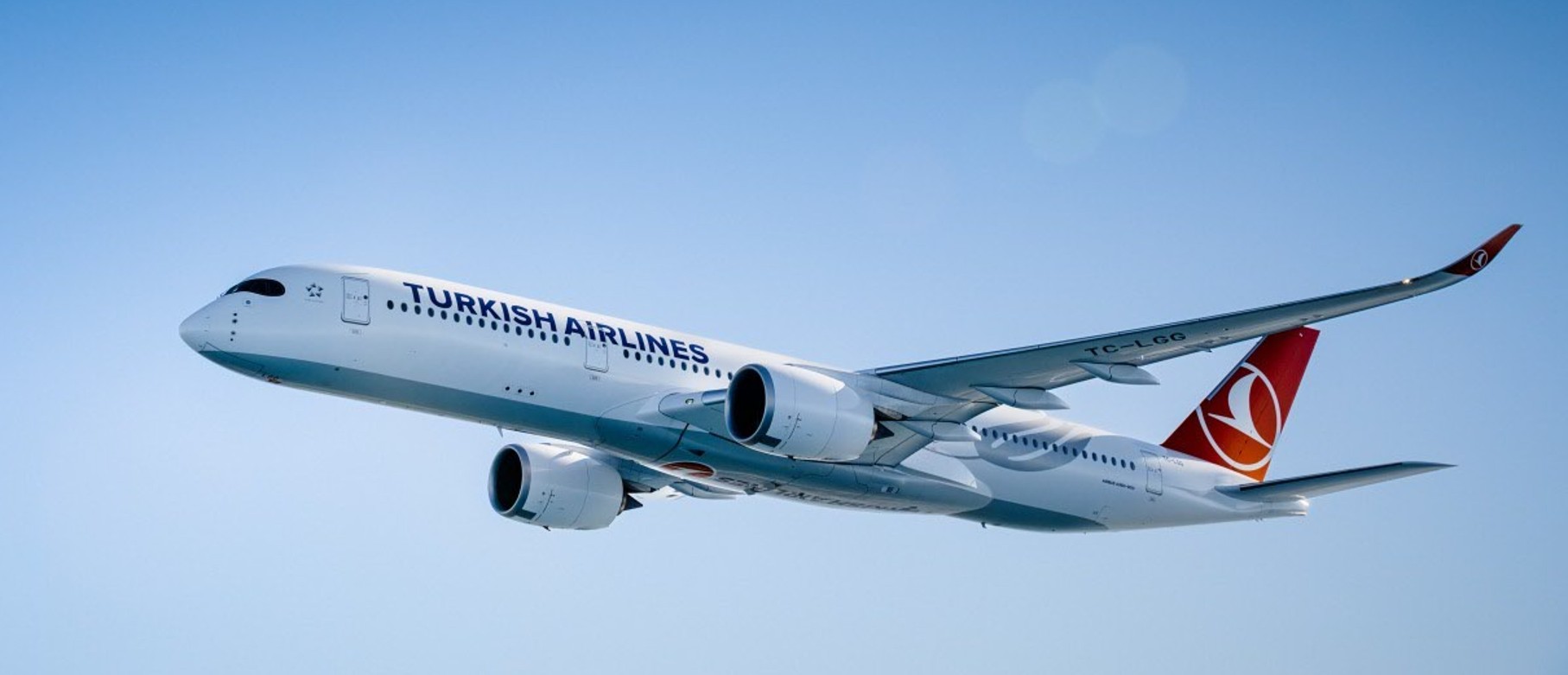
Turkish Airlines said it will soon make a binding offer “very soon” to acquire a stake in Air Europa. This follows reports that the airline remained the only bidder after Lufthansa had exited the bidding battle.
Turkish confirmed in June it was in non-binding discussions to acquire shares in the Spanish airline. It was reported in May that Air France-KLM and Lufthansa halted their negotiations with Air Europa owner, the Hidalgo family, on acquiring a 25% stake in the airline.
According to a report from Spanish newspaper El Confidencial, the family wanted to keep the airline's value at €1bn despite both airlines disagreeing with the value. According to the paper, both airlines refused an offer to buy 25% stake in the airline for €240 million.
“Discussions have continued and we are still very interested,” a Turkish Airlines official said during its earnings webcast. “We are preparing to provide a binding offer very soon… As soon as we have board approval and a board decision, we will announce it publicly.”
The acquisition is part of its 2023 strategic goals to “generate value” and examining investment opportunities to “bring in synergies” with its operations and counterparties.
“Once we have made the binding offer, we will be able to elaborate more thoroughly, but we believe Air Europa will complement our global network and their network,” the official continued. “Air Europa has a very strong presence in Latin America and Iberian Peninsula on both the passenger and cargo segments.”
He added: “There are possible synergies in the areas of MRO, technology, seat production, and loyalty programmes. Considering all those potentials, we are actively inquiring in finding partners where we can combine our synergies.”
The comments were made during its second quarter earnings call. Profits from main operations improved 19.5% to $706 million, while net income dropped 26.7% to $691 million. EBITDAR improved 12% to $1.5bn and EBITDAR margin increased 1.5 percentage point to 25.7%.
Turkish Airlines’ revenues improved 5.6% in the quarter to $5.7bn. This comprised of $4.9bn in passenger revenues, which were up 7.4%, as well as technic revenues up 31.4% to $184 million.
However, cargo revenues fell 9.4% to $802 million. This was driven by softer cargo demand as a result of the US-led tariff trade conflict.
“While we experienced a temporary positive momentum due to the front loading ahead of the tariff implementation, that positive effect was dissipated after the announcement of tariff escalation,” the official said. “We don’t expect any major, substantial change going forward into the second half of the year, we will have similar revenue forecast on cargo as compared to last year and yield erosion will continue.”
He added that given the “current level of communication” as well as the “most of the countries have already settled the tariff rates against the US”, the company doesn’t expect “much uncertainty” around tariffs.
Geopolitical uncertainties in the Middle East and increased tension between India and Pakistan in the quarter also led to two freighters being grounded in the period.
The company said economic uncertainties emerging from tariffs in the US as well as “strict immigration scrutiny” in the country had affected travel sentiment in the region. North American load factor was down around four percentage points and yields were down 5%.
“Going forward, we expect the current demand environment to take a hold in the following months through the summer months, and considering the seasonality, we will channel some capacity from this region to the far east in the fourth quarter,” the company official said during the earnings call. “For next year, we plan to utilise broadly similar capacity in the US market.”
Additionally, the company said it had already received “several postponements” from Airbus and Boeing for 2025 deliveries, but does not expect any further delays. By the end 2025, the company expects a fleet of around 520 to 525 aircraft. As of the end of June, the company had a total of 485 aircraft in its fleet.
The company said it “still had a lot” of A320neo family aircraft grounded as a result of the ongoing geared turbofan (GTF) engine challenges. Altogether, the company has around 90 A320neos and A321neos. Of these, around 35 are grounded and is expected to remain the same through the end of the year. For 2026, the number of aircraft on ground (AOG) may increase to around 40-45, though the Turkish Airlines official said there is still some uncertainty.
“Unfortunately, a big portion of the grounded aircraft with GTF engines belong to Ajet,” the official said. AJet is Turkish Airline’s low cost subsidiary. The airline added 12 aircraft to its fleet this year, but were offset by 12 grounded aircraft. This resulted in net capacity growth for the airline being “negligent”.
Overall capacity was up 6.7% in the quarter, with load factor up 1.1 percentage point to 82.2%. The company carried a total of 23.3 million passengers in the quarter, up 5.4%.
Operating expenses were up 4.3% to $5.4bn in the period.
As of the end of the quarter, the company’s net debt to EBITDA was 1.2x.