

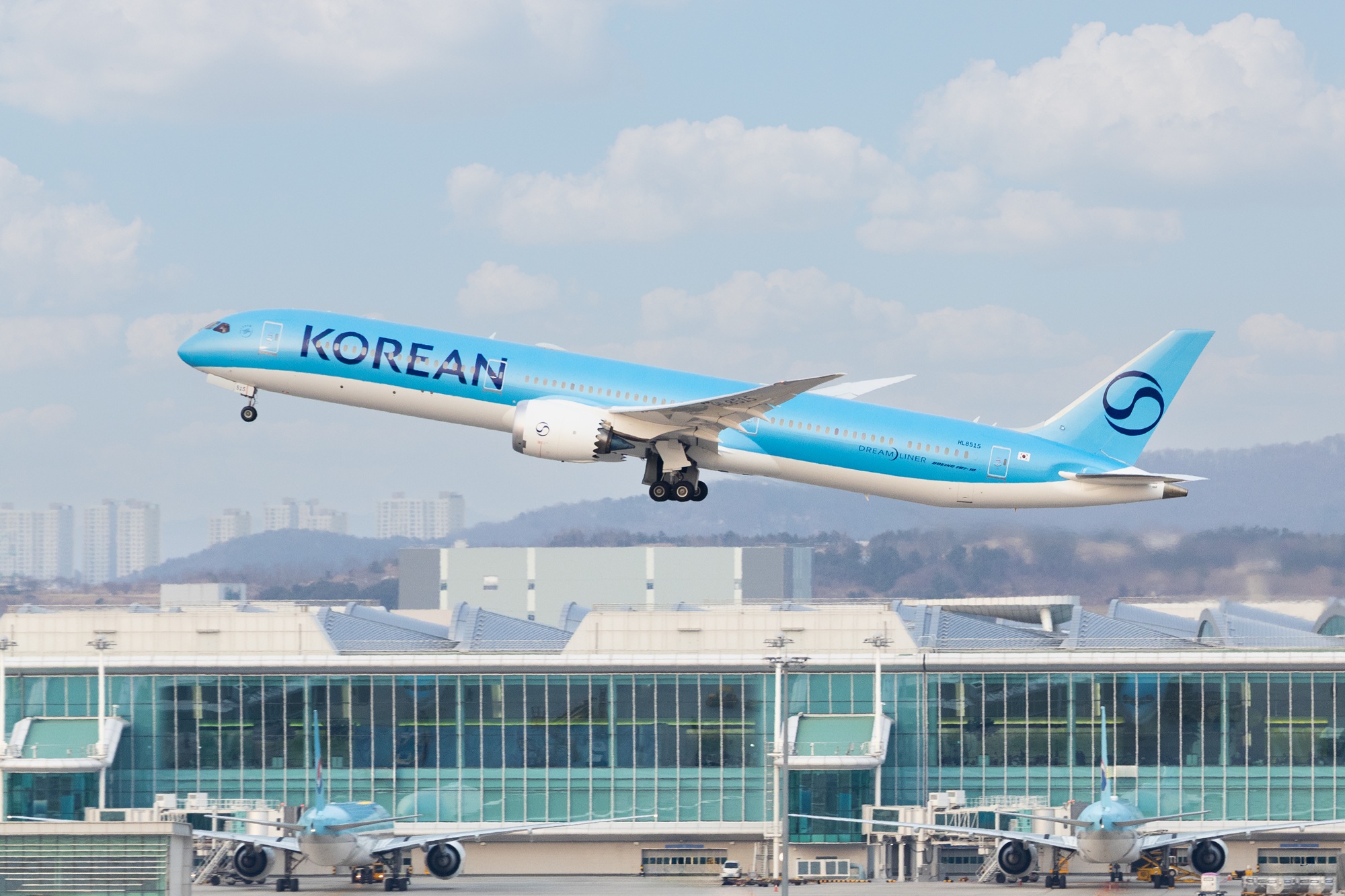
Korean Air has reported a net profit of $65.5 million for the third quarter of 2025, dropping 67% compared to the same period last year.
Operating profit was down 39% to $268.4 million, driven by a dip in revenues and an increase in operational expenses, despite a decline in fuel costs.
Revenues were down 6% to $2.9bn, driven by increased industry-wide capacity and a competitive fare environment. Passenger revenues were down 7.5% to $1.7bn.
The decline in passenger revenues was attributed to the shift in the timing of Korea’s thanksgiving holiday (‘Chuseok’) and “temporary demand variables”, including stricter entry regulations to the US.
Total operating expenses were up marginally by 0.3% to $2.5bn. Fuel costs were down 12.9% to $814.3 million in the quarter. Non-fuel costs were up 6.5% to $1.7bn, which was driven by higher depreciation, maintenance, and operational costs.
“Looking ahead to the fourth quarter, Korean Air expects improved performance across its passenger network, driven by the long Chuseok holiday in October and the year-end peak travel season,” the company said in a statement.
Korean Air said it plans to “maximise profitability” by deploying flexible capacity with a focus on popular winter destinations.
The company said strong demand from China and Japan was supporting its expected performance improvement.
During the quarter, its cargo revenues were down 4.7% to $745.1 million.
“Despite a slight slowdown in the global air cargo market amid rising US tariff risks, the airline maintained stable profitability by flexibly adjusting routes in response to tariff changes and demand fluctuations,” the company said.
Korean Air said its outlook for its cargo business “remains mixed”. Typical year-end cargo demand is expected to be balanced against ongoing trade tensions.
The airline said it will focus on “agile capacity management” in an effort to capture “high-value” cargo and e-commerce demand.