

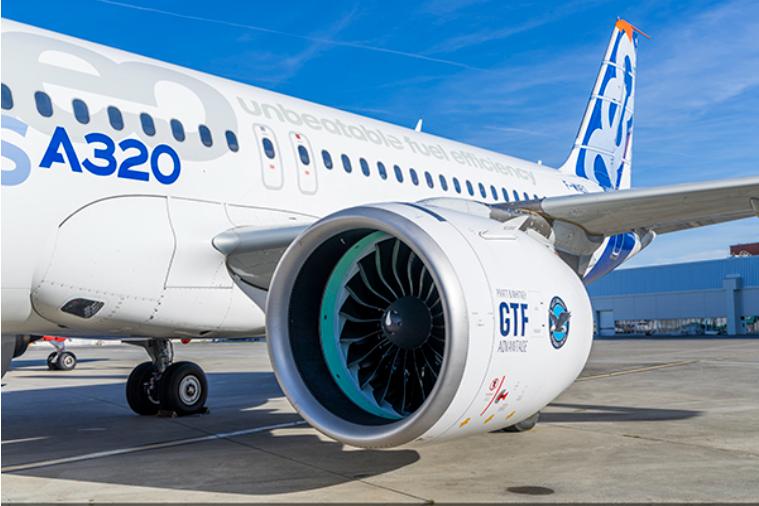
Pratt & Whitney has secured European certification for its next-generation GTF Advantage engine powering the Airbus A320neo family, clearing the way for deliveries and entry into service later this year.
The engine, part of RTX Corporation’s commercial portfolio, was approved by the European Union Aviation Safety Agency (EASA), following earlier certification by the Federal Aviation Administration in February 2025 and validation by EASA in October 2025.
The GTF Advantage builds on Pratt & Whitney’s geared turbofan architecture and will become the production standard for A320neo aircraft by 2028.
Rick Deurloo, president of Commercial Engines at Pratt & Whitney, said the new engine “extends” the performance lead of the GTF family, adding: “The GTF Advantage engine extends that lead - offering up to double the time on wing and enhancing aircraft capability - providing even greater value to operators of A320neo family aircraft.”
The company said the engine delivers 4-8% more take-off thrust, enabling higher payloads and longer range, which could allow airlines to open new routes.
Technically, the engine is fully interchangeable with the current PW1100G-JM engine and offers significantly improved durability. Existing operators will also be able to access up to 90–95% of the new engine’s durability benefits through a GTF Hot Section Plus (HS+) upgrade, available later this year during maintenance cycles.
The A320neo family offers a choice of two engine suppliers, the other being the CFM LEAP-1A engine.
Pratt & Whitney said it is ramping up production to meet demand, investing nearly $1 billion in its turbine airfoil facility in Asheville, North Carolina, and a further $200 million in its forging facility in Columbus, Georgia. To date, more than 2,700 GTF-powered aircraft have been delivered to over 90 customers, with total orders and commitments exceeding 13,000 engines. The company expects the GTF fleet to accumulate more than 300 million flight hours by the mid-2030s.