

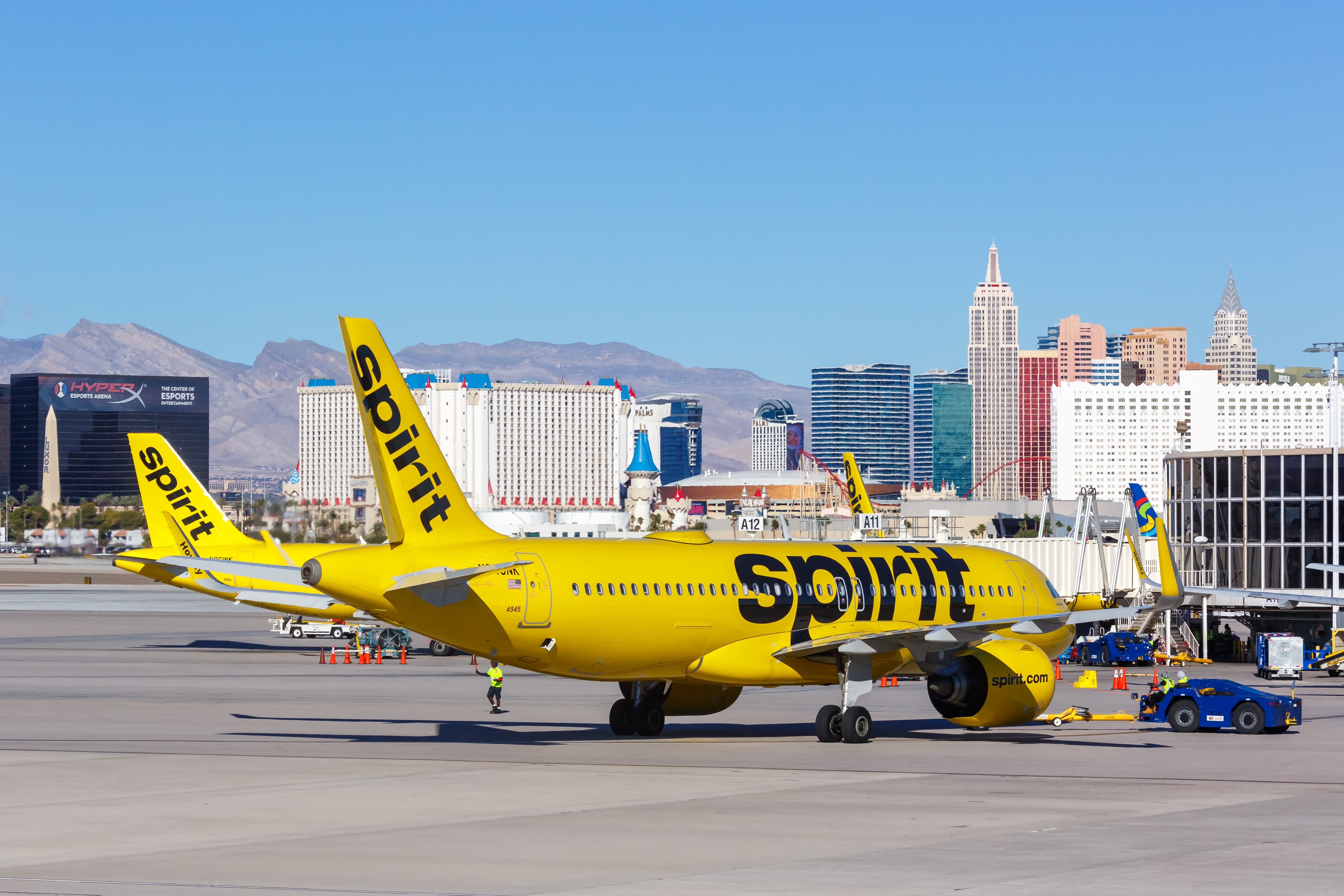
Spirit Airlines is reportedly seeking government financial support as surging jet fuel costs threaten to place the US budget carrier into liquidation with analysts warning against a state bailout.
According to a note from JPMorgan, Spirit is thought to be pursuing “several hundred million dollars” in state aid, arguing that higher fuel prices are worsening its already fragile financial position. While bank’s analysts said exploring all funding options is understandable given the risk of liquidation, they cautioned that any government bailout could set a difficult precedent.
JPMorgan warned that if support were granted, other low-cost carriers such as JetBlue Airways and Frontier Airlines could follow suit, with even larger operators like American Airlines potentially seeking assistance.
The analysts stressed that such a scenario could disrupt competitive dynamics across the US airline sector, particularly for stronger carriers like Delta Air Lines and United Airlines, which have so far benefited from premium demand and stronger balance sheets.
However, they also noted that government support appears unlikely, adding that Spirit’s financial difficulties predate the current fuel price surge.
Separately, JPMorgan revised its outlook for US airlines after lowering its jet fuel assumption to $4.30 per gallon for the remainder of 2026, down from $4.90. The change, combined with stronger-than-expected demand, particularly among higher-income travellers, has led to improved earnings forecasts across the sector.
United is now expected to return to profitability in 2026, with JPMorgan revising its estimate from a $1.12 per share loss to a $5.69 profit. For American Airlines, the bank cut its projected loss by more than half, from $7.13 per share to $2.74.
The improved outlook also reflects stronger revenue expectations for full-service and brand-loyal carriers, including Delta and Southwest Airlines, with analysts expecting airlines to recover around 50% of higher fuel costs in the second quarter and up to 70% in the second half of the year through pricing and capacity adjustments.
By contrast, demand among low-cost carriers is expected to remain more fragile, given the sensitivity of their customer base to economic pressures.
JPMorgan added that domestic capacity is continuing to tighten, with second-quarter US capacity growth now running at around 1.9%, down from earlier expectations of nearly 3%, as airlines cut back schedules to support fares and offset cost pressures.
Meanwhile, Ritchie Torres, US Democrat representative for New York's 15th congressional district, potentially added a political twist to the jet fuel debate by calling on the CEOs of Delta Air Lines, United Airlines, Southwest Airlines and JetBlue Airways to publicly commit to lowering their air fares when fuel costs decline.
He argued that if air fares are truly tied to global fuel costs then they should fall in line with each other and that this was a fair approach.