

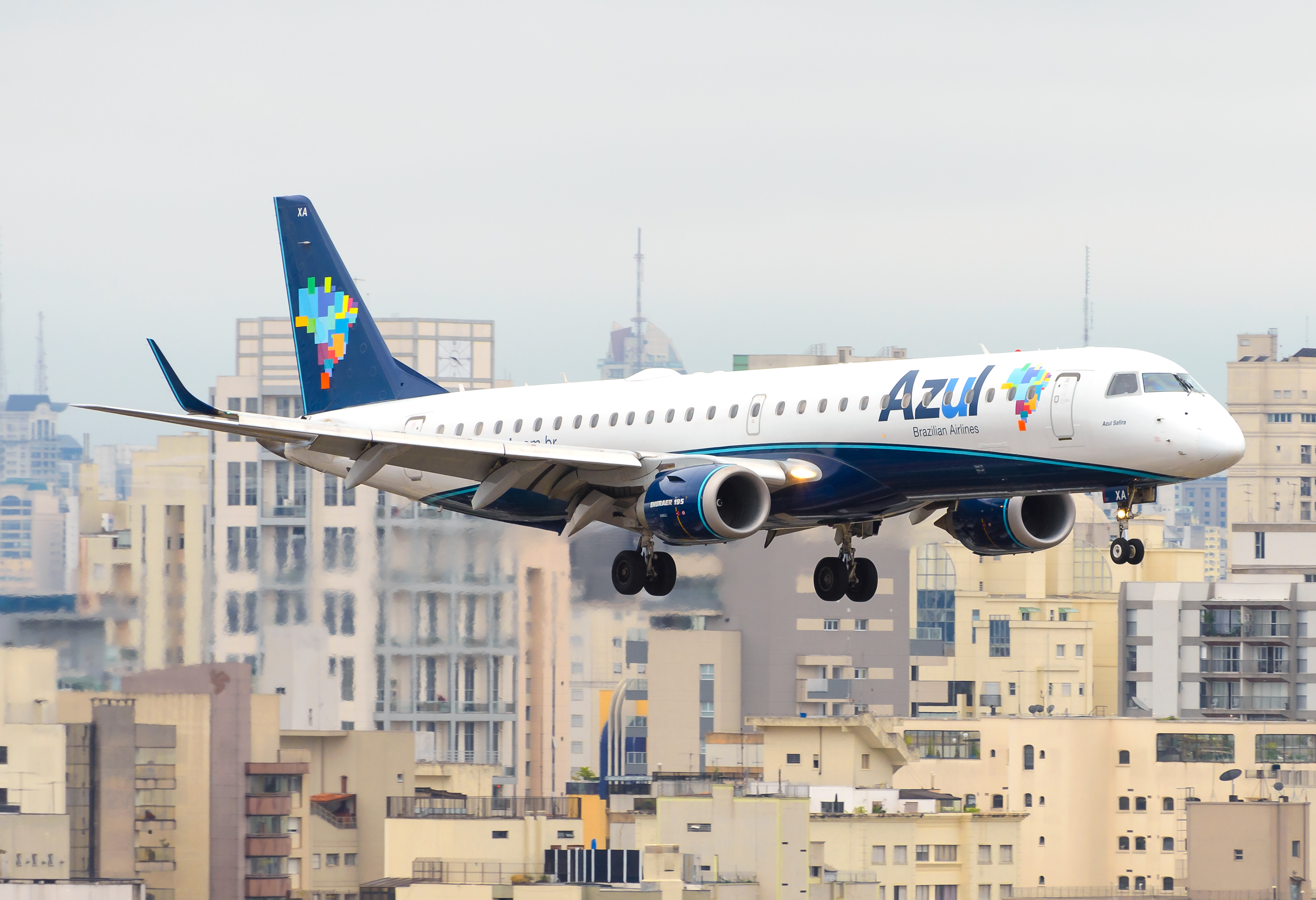
Brazil’s Azul has filed for Chapter 11 bankruptcy protection in the US, after securing support from stakeholders, including major bondholders, lessor AerCap and partners United and American Airlines.
The airline said that this restructuring will aim to reduce debt by over $2bn and includes a $1.6bn debtor-in-possession (DIP) financing package, with $670 million in new liquidity. Upon emerging from the proceedings, the airline plans an equity rights offering of up to $650 million, backstopped by financial partners, and may receive an additional $300 million equity investment from both United and American, pending conditions.
“Azul continues to fly – today, tomorrow, and into the future,” commented John Rodgerson, chief executive officer of Azul. “These agreements mark a significant step forward in the transformation of our business, one that enables us to emerge as an industry leader in the main aspects of our business.”
Rodgerson noted that the company made the decision to pursue a voluntary financial restructuring as a “proactive move”, in order to optimise its capital structure, which has been burdened by the COVID-19 pandemic, macroeconomic headwinds and aviation supply chain issues.
Azul said that this comprehensive financing package means that its path to emergence is clear, which streamlines the process and accelerates the timeline.
AerCap, which represents the majority of Azul’s lease liability, confirmed that it has signed a support agreement with Azul. “As the airline moves through its restructuring process, we are very confident Azul will emerge stronger than ever,” said Aengus Kelly, CEO of AerCap. “Together with Azul, we are the largest owners of Embraer E2 commercial aircraft, supporting the Brazilian aviation industry like no one else.”
Airline Economics research shows that Azul's fleet is approximately 73% leased with 140 aircraft on lease from a range of lessors, with AerCap holding the largest share at 33.57%, leasing 47 aircraft to the Brazilian airline. This is followed by DAE Capital with 24 aircraft and Falko with 12 aircraft.
Both United and American also confirmed their support for Azul’s restructuring process.
This is now the latest Latin American carrier to seek bankruptcy protection, following in the footsteps of Gol, LATAM, Colombia’s Avianca and Aeromexico.
Just last week Bloomberg reported that Azul was in “advanced negotiations” with creditors for financing of around $600 million, noting that this would support the company during “potential” Chapter 11 proceedings.
The airline reported a loss of $2.18 per share in the first quarter of 2025, in contrast to loss per share of $0.57 in the first quarter of the year prior, with Azul's operating result down 28.7% to 570.6 million Brazilian reals ($100.4 million). Operating margin was down 6.5 percentage points to 10.6%. Azul has now stated that previously disclosed 2025 full-year financial guidance has been discontinued.
In April, the airline obtained around 600 million reals ($105.9 million) in additional funding from its existing bondholders. The agreement aimed to strengthen Azul's liquidity position after the debt conversion where 35% of the notes due in 2029 and 2030 were converted into preferred shares. The Brazilian airline stated last month that it is continuing to work with stakeholders to improve its financial position.
This followed the carrier renegotiating 98% of its obligations with aircraft lessors and original equipment manufacturers (OEMs) in October 2024, resulting in $550 million in finalised agreements, which the airline said would aim to reduce debt and improve cash flow. Additionally, the company secured $400 million in additional financing.
S&P Global Ratings recently lowered its issuer credit rating of Azul to 'CCC-' from 'CCC+'. At the same time, the ratings agency lowered its issue rating on the company's senior unsecured notes due 2026 to 'CC' from 'CCC-'; citing a view that Azul’s very tight liquidity increases default risk within the next few months.
Brazil’s Tourism Minister, Celso Sabino, said last week that the country's government is “not concerned” about Azul’s situation and is not considering any specific measures to assist the airline, amid speculation that it would file for bankruptcy protection in the US.
News of Azul's Chapter 11 filing follows last week’s announcement that Gol has received approval from the US Bankruptcy Court for its Chapter 11 plan of reorganisation. The company expects to emerge from its restructuring process in early June 2025. Following the plan, Abra will remain as the airline's largest indirect shareholder.
At the start of the year Abra Group - the majority investor of Gol and Avianca - and Brazilian carrier Azul signed a non-binding memorandum of understanding (MoU) on January 16, 2025, with the intent to explore a combination of their businesses in Brazil.
Azul is supported by Davis Polk & Wardwell, White & Case, and Pinheiro Neto Advogados as legal counsel, FTI Consulting as financial advisor, Guggenheim Securities as investment banker, SkyWorks Capital as fleet advisor and FTI Consulting, C Street Advisory Group, and MassMedia as strategic communications advisors.
The participating lenders are supported by Cleary Gottlieb Steen & Hamilton and Mattos Filho as legal counsel and PJT Partners as investment banker. United Airlines is supported by Hughes Hubbard & Reed and Sidley Austin as legal counsel, while American Airlines is supported by Latham & Watkins as legal counsel, with both airlines being advised by Barclays Investment Bank as investment banker.
AerCap is supported by Pillsbury Winthrop Shaw Pittman as legal counsel.