

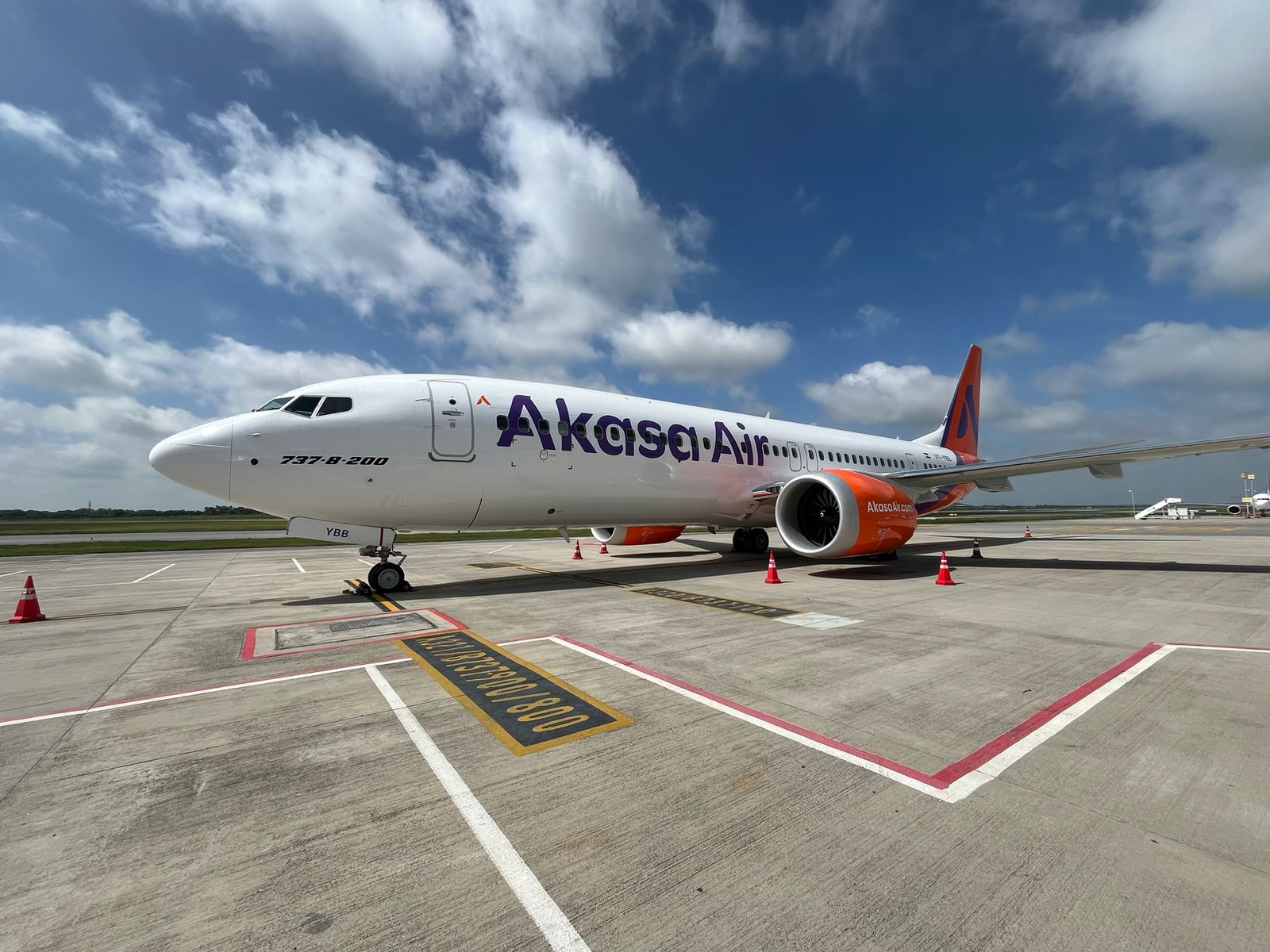
The holding company of Mumbai-based low-cost airline, Akasa Air, has had its credit rating placed on negative watch by ICRA Ratings as rating agencies warn over the impact of the Iran war on the financial health of airlines.
Though most large airlines have so far avoided rating downgrades, smaller carriers may be more vulnerable given their thinner margins, more limited financing options and less diversified route networks. Nonetheless, should the conflict carry on resulting in continued disruption to flights and high oil prices - credit downgrades across the sector could soon follow.
This pressure is already beginning to show. ICRA, an affiliate of Moody’s, said SNV Aviation Private, owner of Akasa Air, is facing strain on its financial performance due to the Middle East conflict.
International routes, mostly to west Asia, make up a relatively modest share of the airline’s overall capacity and it was able to partially redeploy impacted aircraft towards domestic routes. The real pressure on earnings stems from a sharp increase in aviation fuel prices and the depreciation of the Indian Rupee versus the US dollar.
To help mitigate these factors, the airline introduced a fuel surcharge, but ICRA estimates it may need to take more pricing and network optimisation measures - but warns that its ability to pass on costs to customers is constrained.
SNV’s short-term, non-fund-based loan-equivalent risk and its short-term, non-fund-based standby letter of credit (SBLC) are both currently rated A3. ICRA said while the airline is yet to be profitable, its existing cash balances and support from investors should sustain the business and its ability to make repayments, particularly towards its leases, over the near term.
Akasa Air has a fleet of 35 leased aircraft serving 32 destinations, including five international and 27 domestic routes.
Bigger airlines in the crosshairs
Since the U.S. and Israel launched concerted air attacks on Iran on 28 February - rating agencies have issued a slew of notes on the airline industry. The conflict has seen oil prices soar with the West Texas Intermediate (WTI) benchmark rising from around $65 a barrel before the war to frequently trading over $90 once it broke out while air traffic in the Middle East has been severely disrupted.
However, S&P Global Ratings and Fitch Ratings estimate that most of the larger airlines can stomach higher fuel prices provided the conflict is short lived. Fitch Ratings said most EMEA airlines have sufficient ratings headroom to withstand the disruption provided the conflict lasts less than four weeks.
Should the conflict become prolonged there is a risk of passengers travelling less due to lower disposable income resulting from higher inflation, which will add to financial pressures on airlines.
S&P Global Ratings commenting on U.S. carriers said its baseline forecasts carry a significant amount of uncertainty. Unlike most large European carriers, U.S. ones tend not to significantly hedge their fuel costs but also derive a negligible share of their revenue from Middle East travel. It said a number of North American airlines, such as American Airlines, JetBlue Airways and Alaska Air Group, have limited ability to absorb sustained high jet fuel prices while Delta Air enjoys some insulation due to its ownership of refinery operations.
Also, it doubts the ability of U.S. airlines to be able to pass on the costs to customers as they have sometimes been able to do in the past. It notes that U.S. domestic air fares have been mostly unchanged since 2022.
Nonetheless, the rating agency is confident that the conflict will not upend what it anticipates being a favourable year for passenger growth for the region’s carriers. “The industry has faced geopolitical issues in the past and, for the most part, has demonstrated resilience,” it said.
S&P Global Ratings said fuel accounts for over 20% of operating expenses, the second largest cost behind labour. However, when fuel costs are high, they can exceed those of labour.
Mixed picture in EMEA
Among EMEA airlines, the Gulf carriers face the highest risks as their flights have been much more disrupted than their European counterparts. Etihad Airways is the most operationally affected but should be sustained by strong liquidity and state links. By contrast, Air Baltic is the most exposed to higher fuel costs due to its low hedging, according to Fitch Ratings.
The rating agency said Europe-to-Middle East flights, including for countries not currently affected by airspace disruption, represent about 6% of all EMEA traffic both within Europe and outside Europe. The Asia-Europe air corridor is currently operating, although potentially with longer routes, but could benefit from higher ticket prices and cargo yields.
However, the rating agency is concerned that a long conflict could hit EMEA airline profitability as existing fuel price hedges expire and inflation dents passenger demand. Another concern is that Middle East crude is responsible for a higher proportion of distillates, so jet fuel prices could rise more than crude prices.