

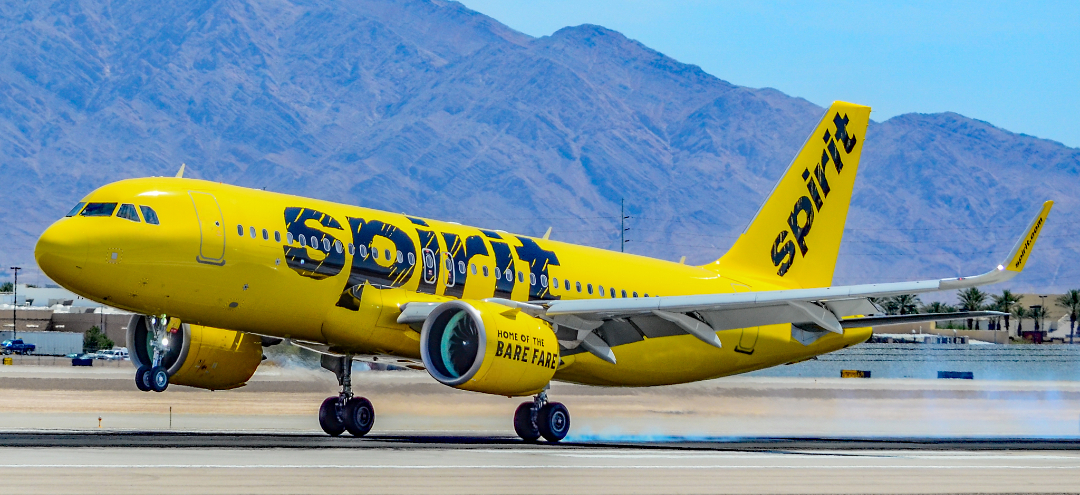
Spirit Airlines has reached an agreement on key terms of a restructuring support agreement with its existing debtor-in-possession (DIP) lenders and secured noteholders.
The airline said that with this agreement, it aims to emerge from its Chapter 11 bankruptcy proceedings in late spring or early summer. The company said it will emerge as a “strong low-cost, value-driven carrier”.
“This agreement in principle is the result of months of hard work and allows Spirit to move toward completing its transformation,” said Spirit CEO and president Dave Davis. “Spirit will emerge as a strong, leaner competitor that is positioned to profitably deliver the value American consumers expect at a price they want to pay.”
Spirit Airlines filed for Chapter 11 in August last year — only months after emerging from bankruptcy protection in March.
The agreement will provide Spirit with the necessary financial support to complete its restructuring and fleet optimisation.
The airline recently said recently it plans to sell 20 A320 family jets — 13 A320s and seven A321s — reducing its fleet to 94 Airbus jets. In prior bankruptcy court filings, the company planned to reduce its fleet to 114 jets — a significant reduction from its 214-strong all-Airbus fleet before its second bankruptcy filing.
Last week, EirTrade Aviation announced it had concluded a deal in partnership with RESIDCO to acquire two A320neo aircraft from Spirit for teardown. These are the youngest A320neo airframes ever to be torn down, with one aged at only four years and the other at 3.5 years.
Spirit said its optimised fleet will include higher aircraft utilisation during peak days while reducing off-peak flying and adjusting capacity to seasonal demand across markets.
Upon emergence, Spirit is expected to reduce its debt and lease obligations from $7.4bn pre-filing to around $2.1bn.
In addition, the airline said it will expand its premium offerings and will add enhancements to its loyalty and co-brand programmes.
In 2024, Spirit had faced significant challenges last year following its failed merger with JetBlue after the US Department of Justice (DOJ) blocked the move, before both airlines agreed to cancel the deal. Later in the year, Spirit and Frontier had a back and forth over a potential merger, with Frontier believing the airline to have over-estimated its value before Spirit ultimately deciding to independently proceed with its premium rebrand plan.
According to a Bloomberg report in December 2025, Spirit and Frontier had revived merger discussions, with the outlet reporting that details of a deal could have been announced by the end of 2025. No details of such deal have yet to materialise.
In panel discussions at recent Airline Economics' Growth Frontier events, Spirit has often been cited as an example of the challenges facing low-cost carriers in the US. Panellists have noted that market leaders in the US airline sector are able to combine competitive low-cost offerings with premium products, while benefitting from strong loyalty revenue. Delta Air Lines, for example, reported that remuneration from its American Express credit card partnership grew 11% in 2025 to $8.2bn.