
Boeing has cut its first losses significantly in the first quarter of 2026, which the US OEM said mainly reflects higher deliveries of its commercial aircraft.
Net losses improved to $7 million in the quarter, compared to the $31 million loss recorded in first-quarter 2025.
The OEM delivered 143 aircraft in the first quarter, up from 130 jets last year. This also marks the highest first-quarter deliveries since 2019, where it delivered 149 jets in the first quarter. This was a slump at the time amid the 737 MAX crashes causing groundings to the fleet. The company had delivered 184 commercial aircraft in the 2018’s first quarter.
However, the company faced significant regulatory oversight challenges in 2024, along with strike action, that hampered its production and delivery efforts. The improvements seen in its first quarter results have shown its investment in quality control are beginning to bear fruit, with its recovery plans proving material.
Alongside the higher delivery volume, Boeing said improved operational performance and “favorable order timing” boosted its results.
Boeing’s negative operating cash flow narrowed significantly in the quarter to $179 million in the first quarter. A marked improvement from its $1.6bn operating cash outflow a year prior.
“With a continued focus on safety and quality, we’re delivering high-quality commercial and defense products and services, while increasing production to uphold our customer commitments and get back to the iconic global aerospace company that leads our industry,” said Boeing CEO Kelly Ortberg.
Ortberg – previously CEO of Rockwell Collins – was brought in to lead the company in August 2024 to steer the company through its challenges.
Revenues were up 14% in the quarter to $22.2bn, while earnings from operations were down 3% to $448 million. Operating margins saw a 0.4 percentage point decline to 2%.
Boeing’s commercial airplanes segment reported a 13% increase in revenues, reaching $9.2bn. Loss from operations widened slightly from $537 million last year to $563 million.
The company said it continues to produce the 737 MAX at 42 per month rate. During the first quarter, Boeing delivered 114 737s. However, some planned deliveries had slipped into the second quarter as a result of some aircraft wiring issues on 25 jets.
“We fully understand the issue, and we have reworked all of the 25 airplanes affected, and most of these have already been delivered,” said Ortberg. “Importantly, this is evidence of our safety management system working to identify issues early and drive continuous improvement and avoid these issues in the future.”
Ortberg highlighted the fact that the wiring issue would not impact its full-year delivery targets or plans to increase production to 47 per month this summer. The company aims to reach 52 aircraft per month later this year.
“When we from 47 to 52, there's a couple of important dynamics that will be a little bit different,” said Ortberg. “That's where we bring in our [Everett] production line — our fourth 737 production line. We're in the process now of bringing that online. The capital is all in place and the facilities are ready to go.”
He added the company is currently hiring for this fourth line and will give them experience through its Renton line.
Ortberg said further rate increases beyond the 52 rate will be dependent on the supply chain, adding that the company “won't have the levels of inventory that he had” previously.
The company is also in the final phase of certification flight testing for the 737 MAX 10 variant. The 10 and 7 variants of the 737 MAX have faced long delay as it contended with quality and safety control.
“We expect of the 737-7 and 737-10 in 2026 and the company anticipates first delivery in 2027,” Boeing said.
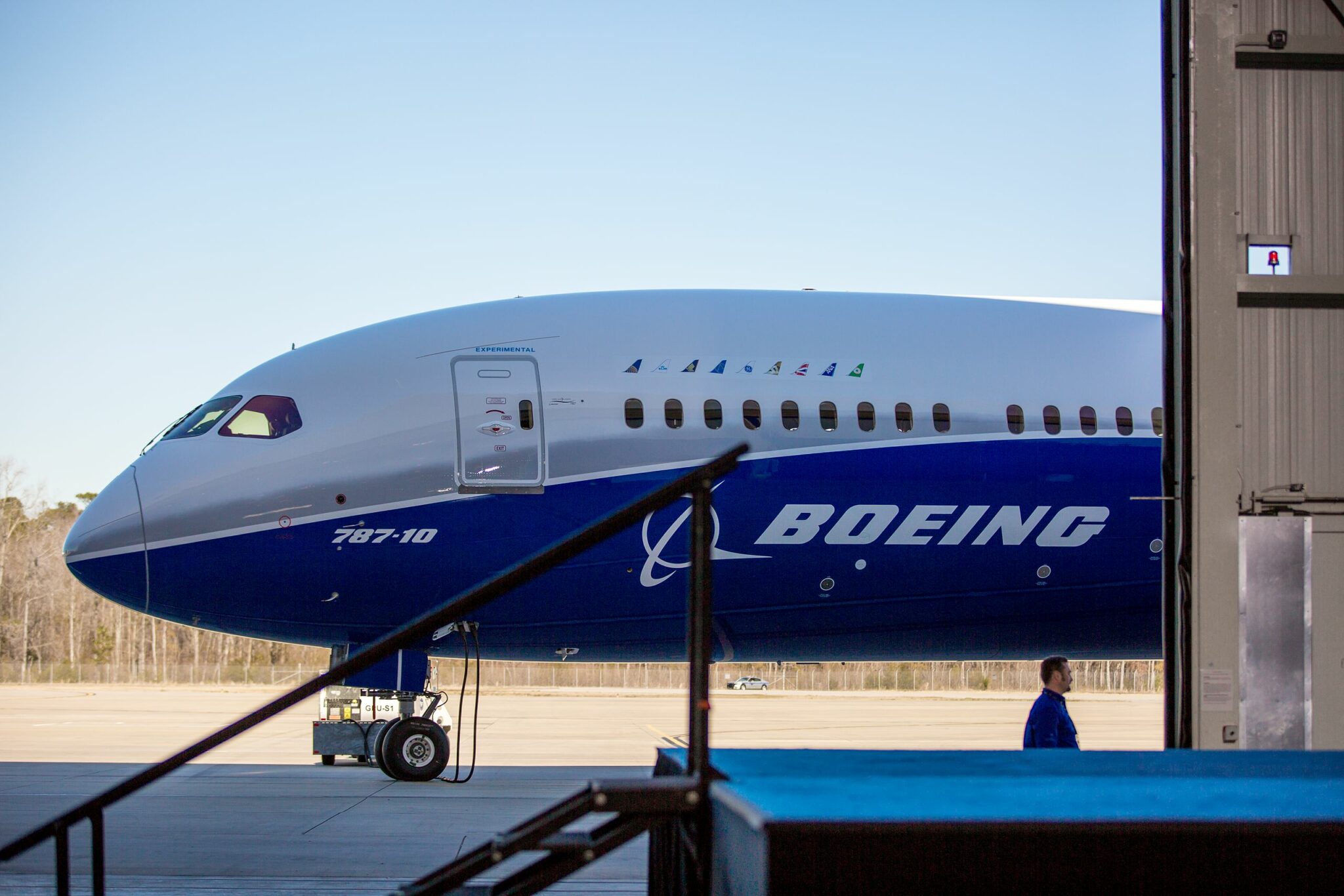
Additionally, it has continued to stabilise production of its 787 widebody, which received FAA certification on the -9 and -10 variants for an increased maximum takeoff weight.
Boeing said it expects first delivery of its long-awaited 777-9 next year after it completes certification flight testing with the FAA.
Last quarter, Boeing and GE Aerospace had disclosed a potential durability issue on the 777X's GE9x engine found during an inspection. Ortberg said the root cause has potentially been found earlier this week and GE is working to finalise modifications on the engines.
Last month, reports surfaced surrounding a potential 500-strong Boeing 737 MAX order from Chinese buyers, including a potential widebody order.
During the call, Ortberg said President Donald Trump would play a key role in the orders being finalised.
“That order is 100% dependent on the US-China negotiations,” he said. “There's a big summit coming up between Trump Xi [Jinping].”
The summit is set for May 14-15 this year.
“I'm highly confident that that will include some aircraft orders,” Ortberg said. “President Trump has been very focussed on supporting us in international campaigns and he's been very successful in doing that. This will be a meaningful opportunity for us.”
Ortberg did not disclose the number of aircraft expected to be signed for, but said it will be a “big number”.
Trump has proven a key player in Boeing orders during his second term. His Gulf tour in the summer of last year amounted to monumental orders for Boeing, including a $96bn order from Qatar Airways for 210 787 Dreamliners. This marked the largest ever order for the widebody jet.
As of the end of the first quarter, the company’s backlog grew to a record $695bn, including over 6,100 commercial jet orders.
Free cash flow was a negative $1.45bn, improving from $2.29bn a year prior.