

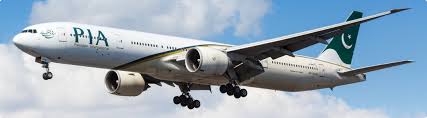
The Pakistani government has entered an agreement to sell a 75% stake in Pakistan International Airlines (PIA) to a consortium led by investment firm Arif Habib Ltd.
The agreement marks a major breakthrough in efforts to offload the long-time loss-making airline after several previous failed attempts, most notably in 2024, when a tender failed to attract a single qualified investor.
During a live televised auction that took place on December 23, the Arif Habib consortium entered a winning bid of 135bn Pakistani rupees ($482 million), comfortably exceeding the government’s reserve price of 100bn Pakistani rupees ($360 million).
Under the transaction, the government will retain a 25 % minority stake, while the new owners are expected to assume management control and inject fresh capital into the airline.
Final approvals by Pakistan’s Privatisation Commission and federal cabinet are underway, with the handover of operations targeted for April 2026, subject to regulatory approval.
Within the consortium, Arif Habib is supported by partners from a diverse range of sectors, including capital markets giant AKD Group, fertiliser manufacturer Fatima Fertilizer, private school network City Schools, and real estate firm Lake City.
Fauji Fertilizer Company (FFC), a military-owned and publicly listed company, also joined the consortium following the entry of the winning bid.
Arif Habib faced competition from a rival consortium led by Lucky Cement, as well as Air Blue, a private airline.
Up until this year, PIA has been a perennial financial drain on the Pakistani government's resources, posting substantial losses and relying on repeated bailouts.
But in April 2025, PIA reported its first annual profit in over two decades, delivering an operating profit of 9.3bn Pakistani rupees ($33.1 million) and a net profit of 26.2bn Pakistani Rupees ($93.2 million) for full-year 2024.
This was followed in September this year, when PIA reported a H1 2025 profit of 6.8bn Pakistani rupees ($24 million).
In late 2024, the IMF made the privatisation of the airline a key condition of its $7bn bailout of the Pakistani government, through an Extended Fund Facility (EFF) that would be disbursed over 37 months.
The successful tender follows a protracted and at times faltering privatisation process, with successive governments struggling to attract acceptable bids for the airline.
A previous attempt in October 2024 collapsed after a sole bidder failed to meet the Privatisation Commission’s minimum requirements.
A renewed push began in March 2025, when the Commission approved a fresh attempt to sell a majority stake in PIA, allowing investors to acquire between 51% and 100% of the carrier.
The difficulty of marketing the airline to private investors has been exacerbated by operational inefficiencies, governance issues, and reputational damage due to safety failures.
In 2020, following a PIA crash that killed 97 people, Pakistan’s aviation minister disclosed that nearly one-third of the country’s pilots had cheated on their licensing exams.
This triggered bans by both UK and European regulators, which remained in place until this year. PIA flights to Europe resumed in January 2025, while PIA flights to the UK resumed in July, following improvements in the country’s aviation oversight capabilities.
The restoration of key international routes was widely seen as a prerequisite for any successful privatisation.