

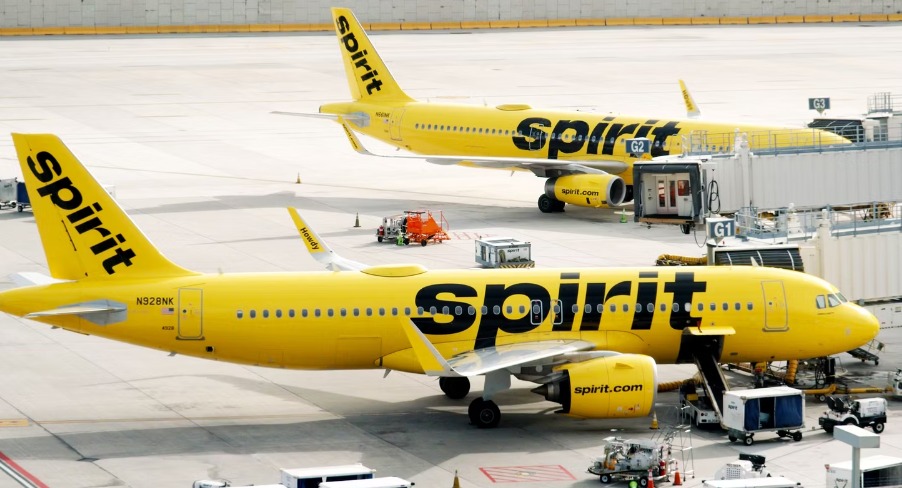
Spirit Airlines could go into liquidation as early as this week, according to people familiar with the matter, who spoke to Bloomberg. Typically, larger listed US companies either file for bankruptcy over the weekend or on Monday morning.
The troubles at Spirit Airlines reflect mounting pressure on the US ultra-low-cost carrier as it struggles to emerge from its second bankruptcy in less than a year.
The airline, which filed for Chapter 11 protection in August 2025, had been working toward a restructuring plan to cut billions of dollars in debt and streamline its fleet. However, a sharp rise in jet fuel prices, driven in part by disruption to global oil supplies linked to the US-Iran conflict, has added further strain to its finances. Fuel is typically the second-largest cost for airlines after labour, leaving budget carriers such as Spirit particularly exposed to volatility.
Yet Spirit’s financial difficulties come despite its efforts to provide a good passenger experience to win over customers. It was ranked the top US carrier in 2026 by WalletHub for reliability and affordability, outperforming larger rivals such as Delta Air Lines and United Airlines.
However, its business model focused on low fares and domestic leisure demand, which has been under pressure since the Covid pandemic in 2020 due to rising costs, shifting consumer preferences and oversupply in the US market.
The carrier’s challenges have been made worse due to a recall affecting Pratt & Whitney engines that grounded dozens of its Airbus aircraft from 2023. Also, its planned acquisition by JetBlue Airways was blocked by a federal judge in 2024 on antitrust grounds. A separate attempt to revive merger talks with Frontier Airlines in 2025 also failed to deliver a solution, leaving Spirit to pursue restructuring on its own.
History of struggle
Historical filings highlight the airline’s enduring financial struggles and restructuring efforts. In an October 8, 2025 note, rating agency KBRA said Spirit had agreed with AerCap Holdings to reject leases on 27 aircraft and planned to return a further 87 aircraft, subject to court approval, as part of efforts to reduce costs and eliminate unprofitable routes.
The note, published during the airline’s previous bankruptcy proceedings, also warned that lease rejections and renegotiations could disrupt cash flows across aviation asset-backed securities, although exposures were described as limited.
Spirit’s financials have deteriorated rapidly. After forecasting a net profit of $252 million in 2024, the airline instead reported losses of nearly $257 million in just a few months following its emergence from an earlier restructuring, before filing for Chapter 11 again shortly after.
The company had planned to exit bankruptcy by spring or summer 2026, but that timeline is now in doubt.
Industry conditions have also worsened. Rising fuel costs, ongoing supply chain issues and geopolitical uncertainty have weighed on airlines globally, while smaller carriers have fewer tools to offset higher expenses.
Spirit has attempted to adapt by offering bundled fares and enhanced seating to attract higher-spending passengers, but has struggled to compete with larger network airlines that benefit from premium cabins and lucrative loyalty programmes.
If liquidation proceeds, it would mark a significant shift in the US aviation landscape, removing one of the country’s most prominent ultra-low-cost carriers and potentially reducing competition on domestic routes.
Analysts note that such an outcome would come just two years after regulators blocked consolidation in the sector, including the JetBlue-Spirit deal, citing concerns over reduced competition and higher fares.
At present, Spirit continues to operate flights while negotiating with creditors, and no final decision has been announced. The airline operates around 80 aircraft.