

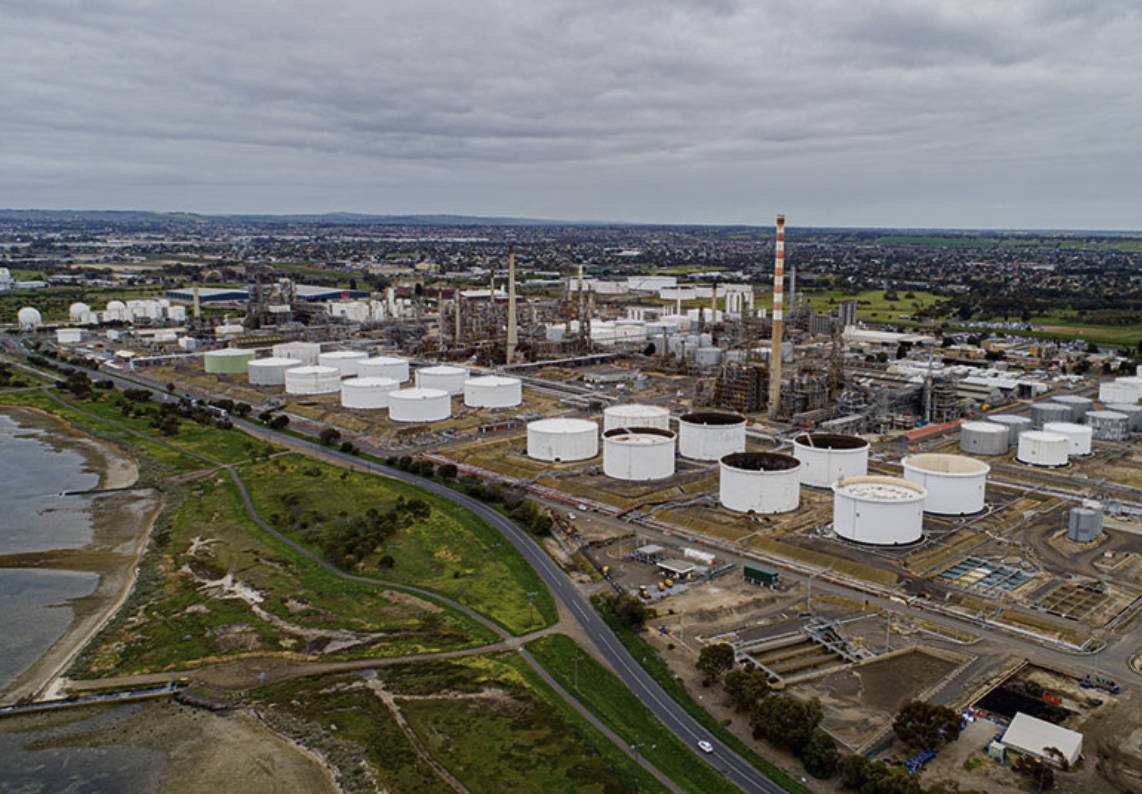
A major fire at the Geelong refinery in Australia has heightened concerns over the resilience of the country’s jet fuel supplies, even as operators and the government moved to reassure markets that production is continuing.
Australian airlines such as Qantas and Virgin Australian were already starting to optimise some routes before the incident - including domestic ones - and increasing air fares. They’ll be monitoring the situation closely to see if further measures need to be taken.
The blaze at the Viva Energy facility, one of only two operational refineries in Australia, burned for around 13 hours after breaking out late at night following explosions linked to a suspected gas leak. Firefighters brought the incident under control by midday local time, with no injuries reported. While the damage was concentrated in the gasoline complex, the refinery remains operational at reduced output.
Viva Energy said: “The facility remains running, on reduced production rates,” adding that the main impact was expected to be on gasoline and aviation gasoline production, with jet fuel and diesel continuing to be produced. The company said there was “no immediate impact to fuel supply” and that it expected to replace any lost output through imports.
For the aviation sector, the distinction between aviation gasoline and jet fuel is important. Energy minister Chris Bowen said the primary disruption relates to aviation gasoline used in smaller aircraft, rather than jet fuel used by commercial airlines. However, he confirmed jet fuel production has been reduced as a precaution, reflecting broader operational constraints at the site.
The Geelong refinery, located about 40 miles southwest of Melbourne, processes up to 120,000 barrels of oil per day and supplies more than half of Victoria’s fuel and around 10% of national demand. Its partial outage comes at a time when Australia’s fuel system is already under pressure from global disruptions linked to the Middle East conflict and the closure of key shipping routes.
Supplies still stable
Despite reassurances, the incident has exposed the tight margins within Australia’s jet fuel supply chain. Experts said the country’s reliance on a small number of domestic refineries, combined with heavy dependence on imported refined fuels, leaves limited room for disruption. While national reserves, estimated at around 28 days for jet fuel, provide a buffer, any sustained reduction in domestic refining capacity could tighten supply and increase reliance on imports.
In the immediate term, jet fuel supply appears relatively stable. The affected unit at Geelong primarily produces gasoline, and Viva’s management said that jet fuel and diesel are manufactured in separate processing units. Production of these fuels has continued, albeit at lower rates, as the facility operates under safety constraints.
However, the broader market impact is likely to be felt through pricing and logistics rather than outright shortages. Analysts said that even temporary disruptions to refining capacity can lead to localised supply imbalances, particularly in regions such as Victoria that rely heavily on the Geelong plant. Aviation fuel supply chains, which depend on coordinated production, storage and distribution, may face short-term pressure as operators adjust to reduced domestic output.
The timing of the incident comes amid already high global fuel prices. Disruptions to oil flows in the Middle East have driven up crude and refined product costs, while tighter shipping capacity and longer routes have added further strain. In this context, any domestic disruption, even one primarily affecting gasoline, adds to the overall pressure on fuel markets, including jet fuel.
Interconnected
Experts said the fire underscores the interconnected nature of fuel supply. While Australia imports a significant share of its jet fuel from regional hubs such as Singapore and South Korea, domestic refining still plays an important role in balancing supply and ensuring distribution flexibility. A reduction in local output narrows this buffer, particularly during periods of heightened global volatility.
There are also concerns about behavioural responses in the market. High-profile incidents such as refinery fires can trigger precautionary buying and stockpiling, even when supply remains broadly adequate. This can exacerbate short-term shortages and contribute to price volatility, particularly ahead of peak travel periods.
Government officials have sought to contain such risks through clear messaging. Bowen said the incident was “a setback” but stressed that fuel supply remains secure, with Viva Energy able to supplement production through imports. He added that any delays in replacing lost output were not expected to be prolonged or significantly costly.
Industry participants have also pointed to the role of the country’s remaining refining capacity. The Lytton refinery in Brisbane, operated by Ampol, continues to run at full capacity and has indicated it could provide support if needed to maintain supply continuity.
Revived debate
Even so, the Geelong fire has renewed debate over Australia’s long-term fuel strategy, particularly for aviation. Experts said the incident highlights the need to diversify supply sources, expand storage capacity and develop alternative fuels such as sustainable aviation fuel and biofuels to reduce reliance on both domestic refining and volatile global markets.
In the near term, the key variable will be how quickly Viva Energy can assess and repair the damaged units. The company said the full extent of the damage is still under investigation and will only be determined once the site is safe to access. Until then, the refinery will continue operating at reduced rates, with jet fuel production maintained but constrained.
For airlines and fuel suppliers, the incident is unlikely to cause immediate disruption to flight operations. However, it adds another layer of uncertainty to an already volatile fuel environment, where pricing, availability and logistics are increasingly shaped by both geopolitical and domestic factors.
As one expert noted, the fire is not a crisis in itself, but it is a clear reminder of how sensitive jet fuel supply chains can be, and how quickly local incidents can ripple through a globally interconnected energy system.